

Episode 294 – AI Cocktails (Part 2)
AI Cocktails (Part 2)
- Listen On:
-

-

-

-

-

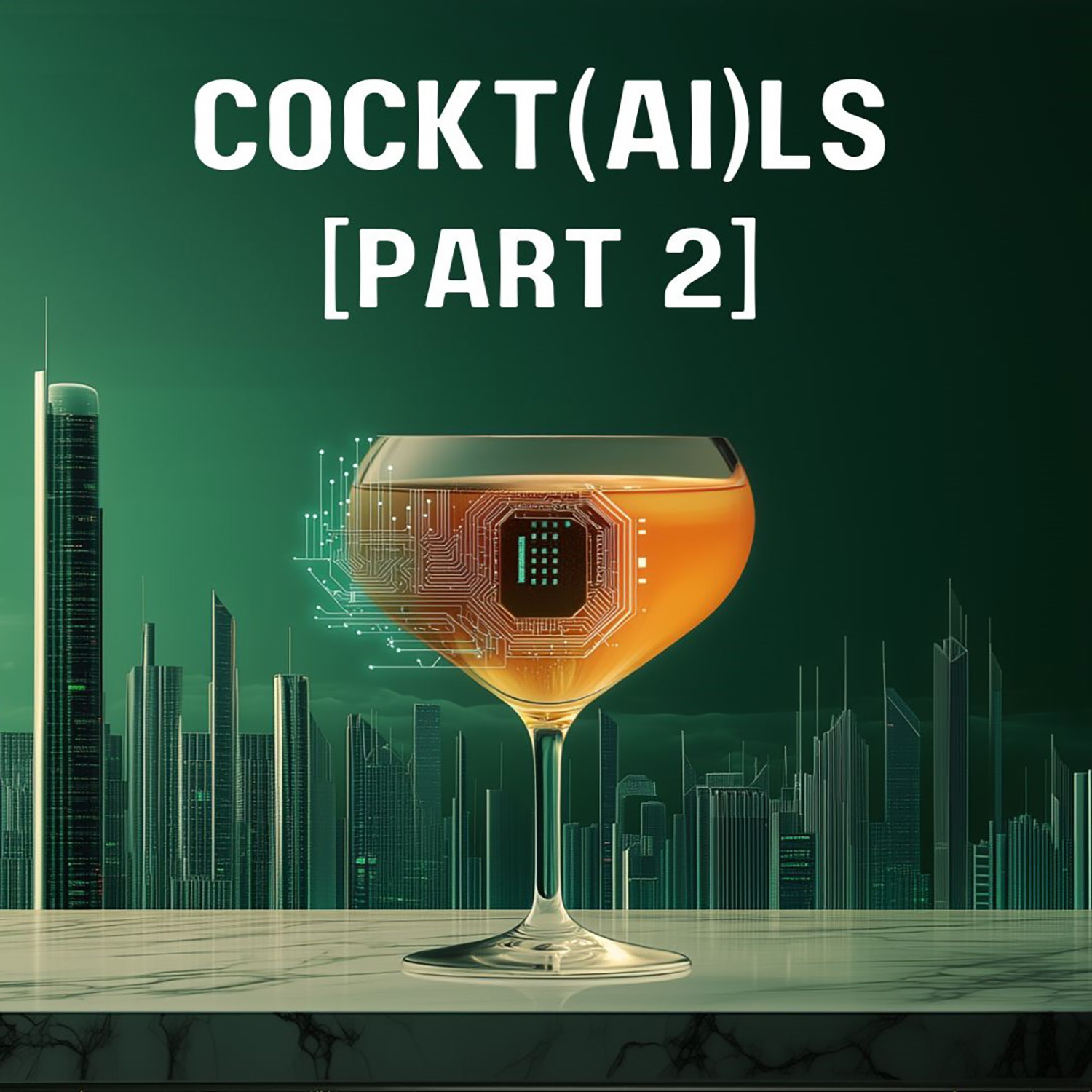
Eric Kozlik continues his conversation with Rob Nester, creator of Drinking with Robots, about artificial intelligence and cocktail creation. Part 2 moves from the mechanics of recipe generation toward a more personal question: which parts of making and enjoying a drink would we actually want to hand over to a machine?
Originally released January 24, 2025, this installment treats AI as a tool whose usefulness depends on the task, the information it receives and the human experience around it. The discussion builds on Part 1, which introduces Rob’s show and its human-versus-AI cocktail challenges.
Eric opens with a thought experiment about technological change. Familiar tools already take on tasks that once relied more directly on our memories, senses and judgment. Navigation apps, for example, can provide directions while a driver retains the ability to choose a different route.
He brings that question back to the bar: when does assistance make a cocktail experience better, and when does delegating part of the process remove something that made it meaningful? The episode considers those boundaries from both sides of the bar, including the guest’s experience of a drink conceived by AI.
Eric and Rob explore AI’s possible role in cocktail development and menu creation. Eric draws a distinction between producing a recognizable, workable variation and creating a drink that is genuinely memorable. A recipe can satisfy the apparent requirements of a prompt while leaving a skilled bartender with substantial work to do.
The conversation also uses the apprentice bartender as a comparison. A person who has learned one style of service may need a different set of habits in a new bar. In a similar spirit, the episode examines how an AI’s input data and the patterns it recognizes can shape the usefulness—and limitations—of its suggestions.
These arguments belong to the original recording’s discussion of AI. The episode is an exploration of creative practice and judgment, rather than a current technical benchmark of language models.
For Eric, one of the most important differences lies in embodied experience. A bartender can taste a developing recipe, observe a guest and connect an ingredient to a memory or preference. A written formula captures only part of that encounter.
The discussion develops the idea that flavor is not simply an individual response to a liquid. It can also emerge through shared stories, attention and hospitality. Eric illustrates this with the possibility of a bartender overhearing a guest’s memory of limoncello in Italy and building a new experience around a related citrus liqueur.
The example shifts the focus from reproducing a recipe toward understanding why a particular drink matters to a particular person. It gives the episode a way to ask what human bartenders contribute beyond selecting ingredients and measuring them.
The conversation leaves room for useful experimentation. Pattern recognition might help suggest combinations that a bartender would not otherwise consider, while human tasting and practical experience determine what deserves further development.
Eric’s position in the episode is to consider AI as an apprentice: something that can assist with basic or time-consuming work while an experienced person remains responsible for the final result. Listeners are invited to consider their own boundaries around creativity, delegation and the experience of flavor.
The introduction features the Quarter Century cocktail, credited to Anders Erickson. The measured recipe and method below follow the episode’s introduction script.
Combine the Campari, apricot liqueur and absinthe in a mixing glass with a small amount of ice. Stir briefly to chill and dilute, then strain into a chilled stemmed cocktail glass. Top with the dry sparkling wine. Express the lemon twist over the drink and discard it.
Eric describes the drink as a meeting point among the Corpse Reviver No. 2, an Aperol Spritz and a Death in the Afternoon: a sparkling serve that brings bitter, fruit and herbal elements together.
Begin with Episode 293: AI Cocktails, Part 1, or visit Drinking with Robots for Rob’s cocktail challenges. Episode 280: Cocktail Futurism provides broader context for this series.
Hosted by Eric Kozlik, with AI and cocktail insights from Rob Nester, creator of Drinking with Robots. Editing and sound design by Samantha Reed. A Direct Fire Studios production, copyright 2025.